This post may contain affiliate links. As an Amazon Associate, I earn from qualifying purchases. I may earn commissions from other affiliate programs as well, at no extra cost to you.
I never imagined I would be the kind of person who tapes their mouth shut before bed. It sounds strange, uncomfortable, and maybe even a little scary. But after years of waking up tired, groggy, and with a dry mouth, I decided to test something simple I kept hearing about online: mouth tape for sleep.
And I’ll be honest — it actually worked.
In this post, I’ll share my personal experience, the real science behind mouth taping, who can benefit from it, who should avoid it, and whether it’s really worth trying.
Why I Tried Mouth Taping in the First Place
For a long time, I thought I was sleeping “fine” – aside from waking up frequently at night, which I actually wrote about in a post telling my story – but my mornings told a different story. I often woke up:
- with a dry mouth
- feeling tired even after spending 7–8 hours in bed
- groggy and unfocused
- slightly congested
- sometimes even with a sore throat
I wasn’t snoring loudly (at least as far as I know), but I did sometimes wake myself up with a small snort or sudden deep inhale — a sign that I was probably mouth breathing at night.
Mouth breathing seems harmless, but it affects oxygen levels, quality of sleep, and even nervous system balance. When I learned how powerful nasal breathing actually is, I finally understood why my sleep felt “off.”
That’s when I decided to try mouth tape — not as a trend, but as a simple experiment to improve my nighttime breathing.
What Is Mouth Tape?
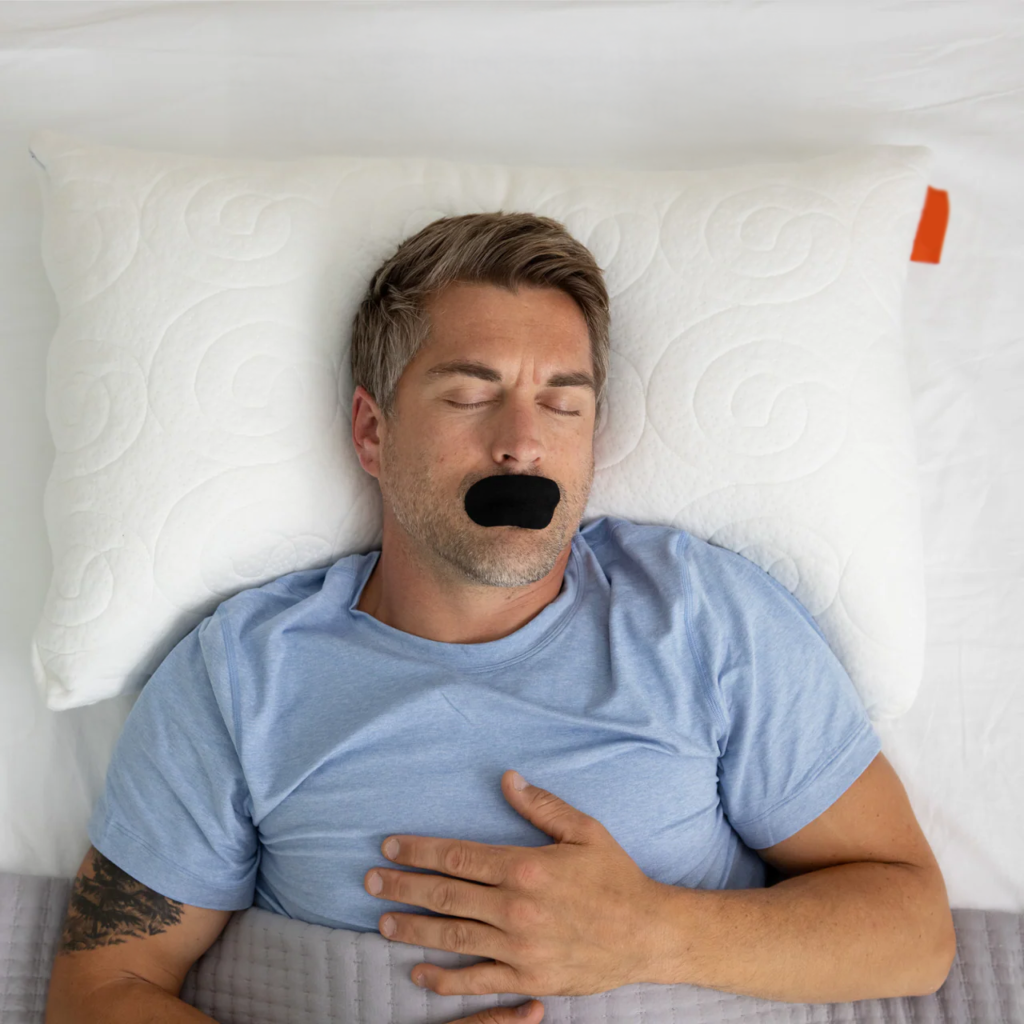
Mouth tape is exactly what it sounds like:
a gentle, skin-friendly adhesive strip designed to keep your lips closed while you sleep.
Important:
This is NOT normal tape from a hardware store.
Real mouth tape is breathable, flexible, hypoallergenic, and safe for skin.
Popular mouth tapes include:
- strips
- X-shaped tape
- reusable silicone mouth covers
The goal isn’t to force your mouth shut — it’s to gently encourage your body to breathe through the nose.
Why Nose Breathing Is So Important for Good Sleep
Here’s where the science comes in.
1. Nasal breathing increases nitric oxide levels
Nitric oxide is a molecule produced naturally by the sinuses. It helps with:
- oxygen absorption
- widening airways
- reducing inflammation
- improving circulation
When you breathe through your nose, your body gets more efficient oxygen delivery compared to mouth breathing.
2. Nose breathing humidifies and filters the air
Your nose warms, humidifies, and filters incoming air — your mouth does not.
Dry, unfiltered air irritates the throat and airway tissues, which can lead to:
- dryness
- snoring
- morning congestion
3. Nasal breathing stabilizes the nervous system
The nasal passages stimulate the parasympathetic (“rest and digest”) system.
This helps your body stay calm during sleep.
Mouth breathing, on the other hand, can activate the sympathetic (“stress”) system, leading to:
- elevated heart rate
- shallow breathing
- restless sleep
4. Mouth breathing is linked to snoring and sleep-disordered breathing
When the jaw drops open during sleep, the tongue can fall backward, narrowing the airway.
This increases the chance of:
- snoring
- fragmented sleep
- mini awakenings you don’t remember
- reduced oxygen saturation
Encouraging nose breathing can help prevent this.
My First Night Using Mouth Tape
I was nervous before trying it.
Would I feel suffocated?
Would I panic?
Would I rip it off in my sleep?
Now here’s the thing, the first few nights I used a simple surgical tape, the one you get from the pharmacy, it was already available at home, and I didn’t want to buy mouth tape before actually testing this idea.
To my surprise, the first minute felt strange, but after a few breaths through my nose, I relaxed.
Here’s what I noticed the next morning:
- I woke up without dry mouth (a miracle for me)
- I felt a bit more rested
- I had zero throat irritation
- I didn’t feel that usual “morning fog.”
It wasn’t dramatic, but it was noticeable.
On the second night, results were even better — I woke up before my alarm feeling awake, which hasn’t happened in a long time.
After about a week, I realized something important:
I had been breathing through my mouth at night for years without realizing it.
What Changed After a Few Weeks
Here’s what improved after using mouth tape consistently:
Better morning energy
I felt more refreshed, even without extra hours of sleep.
No more dry mouth or sore throat
This alone made the whole experiment worth it.
Fewer nighttime awakenings
I used to wake up randomly for no reason — now I stay asleep way more, before adding other steps to improve this.
Less nasal congestion
Ironically, using mouth tape made my nose less congested long-term.
Calmer nighttime breathing
I noticed I breathe more slowly and deeply at night, which helps me fall asleep faster.
Of course, this is my experience — everyone is different — but mouth taping genuinely improved my sleep quality.
The Scientific Benefits of Mouth Taping
Let’s combine my personal results with what research suggests.
1. Reduced snoring
Studies show that mouth breathing increases snoring intensity.
Keeping the mouth closed can reduce airway vibration.
2. Higher oxygen efficiency
Nasal breathing improves oxygen uptake by up to 20%.
3. Lower heart rate variability (HRV spikes)
Mouth breathing triggers mini-stress responses.
Nose breathing keeps the heart calmer.
4. Better sleep stages
Some research suggests nasal breathing helps maintain deeper, more restorative sleep, including slow-wave and REM stages.
5. Prevention of “oral breathing syndrome”
This includes symptoms like:
- dry mouth
- throat irritation
- morning headaches
- daytime sleepiness
Mouth taping directly targets these symptoms.
Who Should Not Use Mouth Tape
This is extremely important.
You should AVOID mouth taping if you have:
- diagnosed obstructive sleep apnea (OSA)
- nasal blockage or deviated septum
- chronic sinus issues
- nighttime asthma
- breathing difficulties
- skin allergies to adhesives
If you suspect sleep apnea but aren’t diagnosed, talk to a doctor before trying mouth tape.
Mouth tape helps promote nasal breathing, but it is not a medical treatment for sleep disorders.
Is Mouth Taping Safe?
For most people with healthy airways, yes — it’s generally considered safe.
But the key is using the right tape, not household substitutes.
Real mouth tape is:
- breathable
- flexible
- easy to remove
- gentle on skin
If you ever feel discomfort, anxiety, or difficulty breathing, remove the tape immediately.
Types of Mouth Tape to Try
There are several popular designs:
1. Narrow Lip Strips
Small strips placed just across the lips.
Great for beginners.
2. Full Lip cover
This is my personal favourite, and it covers your lips completely.
This is my absolute go-to.
And if you think your lips are too big and need more coverage, I’d recommend these.
2. Vertical Strips
Placed from the upper to the lower lip.
More secure but still comfortable.
3. X-Shape Tape
Allows slight airflow through the middle.
4. Reusable Silicone Mouth Covers
No adhesive touching skin.
Good for people with sensitive skin.
How to Use Mouth Tape Correctly
If you want the same positive results I experienced, here’s how to start:
1. Prepare your nose first
If you’re even slightly congested, rinse your nose or use a nasal strip.
2. Only use safe mouth tape
Never use duct tape or anything not designed for skin.
3. Start slowly
Try wearing it for 10–20 minutes before bed to get used to the feeling.
4. Don’t force your lips shut
Your lips should close naturally — the tape simply encourages the habit.
5. Sleep in a comfortable position
Side sleeping is best for nasal breathing.
6. Stay consistent
It may take a few nights before you notice results.
Can Mouth Tape Help With Snoring?
In many cases, yes.
If snoring is caused by mouth breathing (which is extremely common), keeping the mouth closed can reduce or even eliminate snoring.
However, if snoring comes from nasal blockage or sleep apnea, mouth tape may not help.
Is Mouth Taping Worth Trying? My Honest Opinion
For me, the answer is yes.
It’s inexpensive, non-invasive, and surprisingly effective.
I didn’t expect much — but the improvement in my morning energy and dryness was almost immediate.
Here’s who I think benefits most:
- People who wake up with dry mouth
- Light snorers
- People who breathe through their mouths at night
- Anyone feeling unrested despite enough sleep
- People trying to train nasal breathing
- Those wanting calmer breathing before bed
If you’re curious but nervous, remember:
You’re not sealing your mouth shut — you’re gently guiding it closed.
You can always remove the tape instantly.
Final Thoughts: Mouth Taping Improved My Sleep More Than I Expected
I used to think my sleeping problem wasn’t related to the way I was breathing at all, but mouth taping showed me how much better my sleep could be.
I wake up:
- more refreshed
- more hydrated
- less tense
- and more mentally clear
And all because I switched from mouth breathing to nasal breathing during the night.
Mouth tape isn’t magic, and it’s not for everyone.
But for many, it’s a simple habit that can significantly improve sleep quality.
If you struggle with dry mouth, light snoring, or low-energy mornings, it’s absolutely worth trying.
Good night, friend!